

How we Safely and Efficiently Decommission a Radio Site
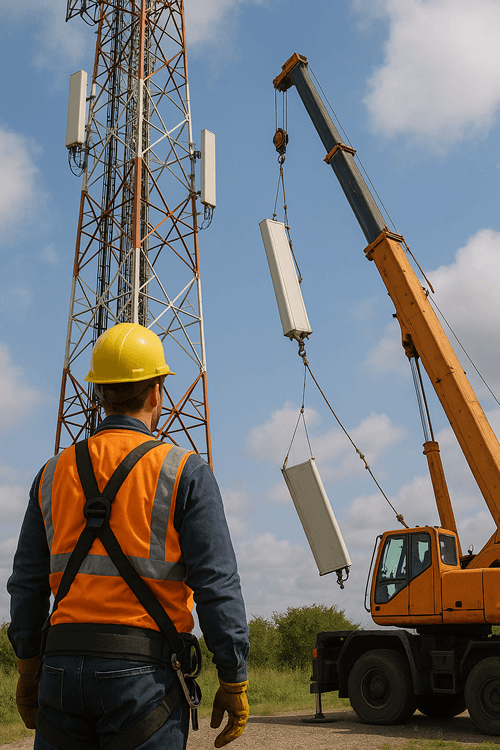
Shutting down a radio site is simple enough, but without a formal process, it can lead to safety risks, regulatory difficulties and surprise cost. At Rapid Wireless, we’ve refined a broad-level decommissioning plan that safeguards people, saves the environment and guarantees you’re in complete compliance but without revealing every operational detail. Here’s an overview of our process. 1. Strategic Planning & Regulatory Liaison Our project team develops a tailored decommissioning strategy prior to initial cable cut. We coordinate with Ofcom and local authorities to verify licence surrender and land-use approvals, and maintain stakeholders throughout. This early coordination eliminates costly delays and a seamless regulatory exit. 2. Health, Safety & Environmental Controls Safety first. Our engineers conduct a swift risk assessment to highlight potential dangers, ranging from working at height to standing over batteries and cables. We bring in trained personnel with safety kit, disconnecting live equipment and following industry optimum safety procedure. At the same time, environmental safeguards such as spill-containment systems protect sensitive terrain and wildlife. 3. Equipment Isolation & Removal With authority and safety protocols, technical personnel down transmitters, sever feed lines and remove antennas, cabling and mounting hardware in a stepwise fashion. Though we can’t publish each technical detail, precision tooling and step-by-step checklists minimise the potential for damage to reusable items or the adjacent infrastructure. 4. Secure Asset Handling & Responsible Disposal We carefully detail equipment to be refurbished or redeployed, optimising your return on investment. Anything beyond its usable life is handled by recognised recycling partners, with batteries, metals and electronic components responsibly disposed of in compliance with UK environmental law. 5. Site Restoration & Handover Once the gear has been removed, we restore the area to the agreed condition, whether that is reinstalling concrete pads, reseeding ground cover or restoring control to building management. Our concise documentation package verifies all work scopes complete, licences are handed back and compliance is achieved. A seamless decommissioning of radio sites requires careful planning, stringent safety control and commitment to environmental responsibility. Rapid Wireless delivers all three, so you can Decommission legacy sites with peace of mind. Need to decommission a site?Speak to our decommissioning specialists today for a discreet, end-to-end solution: Contact Rapid Wireless today to discuss your requirements and get a free, no-obligation quote:Call us: 0151 282 1800 or Email us: sales@rapidwireless.co.uk
Common Telecom Licensing Challenges and How to Overcome Them

Navigating telecom licensing can often feel like stepping through a maze. Whether you’re setting up a new wireless network, deploying infrastructure or expanding existing operations, the regulatory landscape can be complex and time-consuming. Yet, getting your telecom licences right is essential to ensure compliance, avoid penalties and keep your projects on track. Let’s talk a bit about the most common telecom licensing challenges and how to overcome them best. 1. Understanding Regulatory Requirements UK telecom regulation is intricate and in flux, making it difficult to remain current with the requirements. From Ofcom licensing for radio frequency through site installation planning permission, there are various degrees of compliance. The issue: Uncertainty as to exactly which licences apply to your specific use case, whether that’s a point-to-point connection, mobile repeater or private network. The solution: Work with a partner who has Ofcom rules by heart. At Rapid Wireless, we guide you on which licences you’ll need and guide you through the process from application to approval to guarantee full compliance at every step along the way. 2. Long Approval Processes Obtaining telecoms licenses is time-consuming, especially for new frequency applications or mass-scale rollouts. Delays cause project delays, delayed deadlines and angry stakeholders. The issue: Excessive waiting times for Ofcom consent and the danger of half-baked applications adding to delays. The solution: Proper, accurate documentation at the beginning slashes the process time by dramatically. Our experienced engineers know what regulators need and ensure that all technical requirements are documented correctly before submitting, avoiding delays to you. 3. Frequency Interference and Coordination In high-density markets or multiple-operator situations, frequency interference is a nightmare. When two systems have the same or overlapping frequencies, performance degradation and legal battle can ensue. The challenge: Obtaining clean spectrum with best network performance. The solution: Get a frequency coordination study done prior to applying for your licence. Rapid Wireless employs sophisticated modelling of coverage and interference using sophisticated tools, so your system runs smoothly and within Ofcom’s technical parameters. 4. Compliance and Monitoring Compliance doesn’t end once your licence has been awarded. Regular audits, technical revisions and equipment upgrades all must be to regulatory standards. The challenge: Having to ensure continued compliance as your technology and network change. The solution: Have a compliance management plan in place. We monitor network performance and regulatory updates for our customers at Rapid Wireless, so your systems are compliant and future-proofed without the admin burden. 5. Site Access and Local Permissions Even with the correct telecom licence in place, you can be held back if you do not have the relevant planning permission or land access agreements. The issue: Overlapping requirements amongst Ofcom, councils and landowners can create confusion and project delays. The answer: Discuss everything with all the parties upfront and let our experts take care of the communications for you. Rapid Wireless has extensive familiarity with these permissions, streamlining them to keep your project on track. How We Can Help At Rapid Wireless, we simplify telecoms licensing for UK businesses. Our end-to-end offering includes: Whether you’re launching a new private wireless connection online, increasing your infrastructure or running across several sites, our experienced team ensures your network operates legally, efficiently and without interruption. Get Professional Help with Your Telecom Licensing Telecom licensing needn’t be complicated, provided you have the right partner in your corner. Contact us today to speak with our licensing experts and discover how we can help you achieve Ofcom compliance, streamline approvals and keep your network in compliance.
Innovative Designs for Modern Telecom Sites: Balancing Function and Aesthetics

Gone are the days when telecom sites were purely functional steel towers that dominated the skyline. Today’s network deployments demand both high performance and visual harmony with their surroundings. At Rapid Wireless, our site designs balance coverage, regulatory compliance and streetscape appearance to meet your project goals. Read on to see how we merge engineering excellence with aesthetic flair, so your next deployment enhances both connectivity and community appeal. 1. Stealth Masts and Camouflage Techniques When Towers Become Trees or Lamp Posts In sensitive areas such as conservation zones, heritage districts or city centres, traditional lattice towers simply won’t fly (literally or figuratively). We employ stealth mast solutions that mimic tree silhouettes, street lamps or flagpoles, ensuring your equipment blends seamlessly into the environment. Our design process includes 3D-printed prototypes, material finish tests and stakeholder reviews to nail both form and function. 2. Small-Cell Enclosures with Style Pocket-Sized Performance, Big Visual Impact As 5G densification accelerates, small-cell nodes are popping up on street furniture and building façades. Rather than bulky boxes, our weatherproof, vandal-resistant enclosures feature minimalist lines, powder-coated colours and optional branding panels. These micro-sites pack powerful radios and antennas into discreet housings, delivering gigabit-class speeds without sacrificing local character. 3. Integrating Public Art and Community Engagement From Equipment to Attraction Why not turn cabinets and cabinets into canvases? We partner with local artists and councils to create mural-wrapped shelters and sculptural installations that house radios, batteries and backup power. This not only reduces community resistance but can even become a local talking point transforming necessary infrastructure into public art. 4. Modular, Future-Proof Designs Adaptable Platforms for Tomorrow’s Tech The pace of wireless evolution shows no signs of slowing. Our modular site frames use standardised mounting rails, quick-release brackets and plug-and-play power trunks, allowing for rapid upgrades to 5G, Private Networks or emerging 6G technologies. This “design once, evolve forever” philosophy saves time, reduces waste and protects your capital investment. 5. Sustainable and Low-Impact Installations Green Energy and Eco-Friendly Materials Modern site design must factor in environmental stewardship. We integrate solar-assisted power systems, rainwater harvesting for cabinet cooling and timber-look composite panels sourced from recycled materials. Meanwhile, low-impact groundwork techniques preserve root systems and local wildlife habitats so you meet sustainability goals without compromising network performance. Conclusion & Call to Action When function meets aesthetics, telecom sites become community assets rather than eyesores. Rapid Wireless’s innovative design portfolio from camouflaged masts and art-backed cabinets to modular 5G platforms ensures your network stands out for all the right reasons. Ready to elevate your next deployment? Contact us today to explore bespoke, beautiful and high-performance site designs.
Cyber Essentials Plus Certification Achieved

We are pleased to announce that we has successfully achieved Cyber Essentials Plus certification. Cyber Essentials is a government-backed scheme designed to help organisations guard against the most common cyber threats. The “Plus” accreditation builds on this by requiring a rigorous, independent technical audit to confirm that our systems and processes are not only in place but also effective in practice. This achievement reflects our ongoing commitment to cyber security and reinforces the measures we take to safeguard our own data, as well as the information entrusted to us by our customers and partners. In today’s digital-first world, we view cyber security as a fundamental business priority rather than an IT task. The certification highlights: We are proud of the efforts of our team in securing this accreditation and will continue to invest in robust security measures to ensure our business and yours remains protected.
Tools of the Trade: How We Conduct Expert LOS Surveys

You’ve seen it before… the team turns up, the mast goes up, the dish is aimed and everyone waits for the moment of truth. Sometimes the link lights up and everything hums along. Other times it doesn’t — a rooftop obstruction nobody expected, a patch of interference, or the wrong size antenna ordered for the job. What should have been a tidy install becomes a day of improvisation, extra hardware and annoyed stakeholders. A professional line-of-sight (LOS) survey is the best way to avoid those days. At Rapid Wireless we treat surveys as risk management, not box-ticking. The aim is simple – remove uncertainty early, give installers clear, usable guidance and prove the design will perform before equipment is ordered. The result? Faster installs, fewer re-visits and links that work first time. Start smart: desk planning that saves site time Before we ever travel to a location, we do the homework that reduces surprises on site. We review current mapping and imagery, check planning considerations and build a practical shortlist of candidate locations. That desk work rarely sounds glamorous, but it consistently means fewer site visits, shorter survey time and lower project cost. See it for real: field checks that matter Maps and models are useful, but nothing beats checking things on the ground. Our engineers validate sightlines, assess mounting and access constraints and run interference checks so decisions are based on observed conditions rather than assumptions. Those on-site observations convert uncertainty into reliable data and give installers the context they need to succeed. Model with purpose: turning data into confidence Back at the office we use the survey inputs to forecast real-world performance. This modelling gives clear visual outputs, coverage maps, clearance visuals and link assessments so antenna choices, aiming angles and cable runs are chosen on evidence not guesswork. The modelling is not a substitute for experience; it amplifies it so procurement and installers can act with confidence. Deliverables installers actually use Our reports are designed for action. Rather than long theoretical documents, clients get concise, install-ready packs: elevation visuals, photographs of potential obstructions, recommended antenna sizes and mounting heights and pragmatic mitigation options where paths are imperfect. These deliverables shorten on-site decision time, reduce risk of re-work and keep schedules on track. The common mistakes we stop before they happen Over the years we see the same causes of delay. Planning from out-of-date images, skipping on-site interference checks, ordering undersized antennas, or failing to design for safe service access. A professional LOS survey catches those issues early and gives you practical, low-cost options to resolve them before they affect the build. What we won’t publish and why that matters to you We share high-level insights so clients understand value, but we keep our detailed workflows and bespoke modelling methods private. Those processes are part of how we reliably deliver results and protecting them helps us keep delivering better outcomes for our customers. If you need tender-ready templates, sample deliverables or procurement checklists, we provide those under a gated download or secure briefing to qualified prospects. A robust LOS survey is insurance for your link. It turns guesswork into verified data, reduces on-site surprises and protects your schedule and budget. Whether you’re planning rooftop links in a dense urban centre, rural backhaul, or a private 5G campus, start with a survey that gives installers everything they need to deliver first-time success. Ready to lock down your next wireless link? Call our survey team on 0151 282 1800 or contact us via our contact form. For tender or sensitive projects we’re happy to share additional detail under NDA or in a secure briefing.
Top 5 Mistakes Companies Make When Planning a Wireless Network (and How We Help Avoid Them)

Embarking on a wireless network rollout can feel like navigating a minefield. One misstep and you’re looking at delays, blown budgets or unreliable coverage. At Rapid Wireless, we’ve seen it all and more importantly, we know exactly how to sidestep these common traps. Here are the top five mistakes we help our clients avoid, time after time. Mistake 1 – Skipping Detailed Site Surveys Diving straight into hardware purchases without surveying the terrain leads to blind spots, unexpected interference and costly retunes. How we help: Our Site Surveys & Radio Path Planning combine drone imagery with advanced RF modelling, revealing obstructions and propagation quirks before you buy a single antenna. Mistake 2 – Underestimating Spectrum Licensing Complexities Applying too late or incorrectly to Ofcom licences can trigger fines, equipment lockdowns and project standstills. How we help: Our Spectrum Licensing & Regulatory Support team handles your Ofcom submissions end-to-end, managing paperwork, frequency allocations and re-applications so you face zero licence headaches. Mistake 3 – Failing to Forecast Capacity Correctly Misjudging user numbers, data demands or peak-time loads means sluggish speeds or dropped connections just when you need them most. How we help: How Rapid Wireless Helps:We develop bespoke Network Design & System Integration plans, modelling current and future traffic to right-size radios, backhaul and indoor coverage, so your network scales as you grow. Mistake 4 – Rushing Microwave Link Commissioning Even perfectly surveyed paths underperform if alignment, fade-margin checks and throughput tests are skipped or rushed. How we help:Our Microwave Link Installation & Commissioning service includes on-site antenna alignment, load testing and spectral scans, guaranteeing you hit your SLAs from day one. Mistake 5 – Overlooking Ongoing Maintenance & SLAs Networks age, weather events happen and software vulnerabilities arise. Without a proactive support plan, small issues balloon into major outages. How we help: With our Ongoing Maintenance & SLAs, you receive scheduled health checks, 24/7 monitoring and rapid-response engineers, keeping your network healthy, secure and online. Ready to Get It Right First Time? Wireless network planning needn’t be a gamble. With Rapid Wireless as your partner, from initial site surveys through spectrum licensing, installation and beyond, you’ll avoid costly mistakes and enjoy a reliable, future-proof network. Speak to our wireless experts today to discuss your next project!
Smart Site Design: How We Optimise Coverage, Compliance and Cost

When it comes to rolling out a wireless network, every decision from mast height to licence timing carries a price tag. At Rapid Wireless, we’ve honed a “smart site design” approach that balances rock-solid coverage, iron-clad compliance and razor-sharp budgets. In this post, we’ll take you behind the scenes of our process, sharing the methods and mindsets that turn complex projects into seamless deployments. 1. Intelligent Planning: The Blueprint for Success Great site design isn’t just about pointing antennas sky-high. We start with rigorous site surveys (complete with drone-captured imagery and advanced RF modelling) to identify terrain quirks, neighbouring structures and potential interference sources. By layering environmental data with usage forecasts, we create a blueprint that maximises signal reach while avoiding “dead zones.” Why It Matters: 2. Compliance Made Effortless Ofcom licensing, planning permissions, health-and-safety regulations – it’s a tangle that can grind projects to a halt. Our dedicated compliance team steps in early to manage applications, negotiate local authority agreements and secure all the paperwork before any hardware is ordered. That means zero surprises when it’s time to fire up those transmitters. Key Benefits: 3. Cost Control without Compromise Every pound counts. Through long-standing relationships with top manufacturers, we negotiate preferential rates on radios, antennas and masts, savings we pass on to you. Even better, our modular design philosophy lets you “future-proof” infrastructure: add capacity or upgrade spectrum licences without ripping out existing kit. Smart Savings: 4. Seamless Installation & Commissioning Once plans and permits are locked down, our install teams take over. Whether it’s mounting microwave links on rooftops or integrating private 5G in a manufacturing plant, we follow a strict validation checklist. Alignment, load testing, end-to-end throughput verification, no link goes live until it meets our exacting performance targets. Our Promise: 5. Proactive Maintenance & Support A “set-and-forget” mentality only leads to downtime. With our tailored Service Level Agreements, we schedule regular health checks, firmware updates and reactive support 24/7. Should anything go awry – storm damage, equipment failure or unexpected interference, our engineers are on standby to restore service fast. Peace of Mind: Smart site design is a blend of careful planning, regulatory savvy and budget-wise decisions, exactly what we deliver at Rapid Wireless. Whether you’re upgrading an existing network or starting from scratch, our end-to-end service ensures you get the coverage you need, remain fully compliant and keep costs under control. Ready to design smarter, not harder? Speak to our wireless experts today and discover how Rapid Wireless can transform your next.
The Hidden Costs of Poor Indoor Signal at EV Charging Points

As electric vehicle (EV) adoption continues to grow across the UK, charging stations have become critical infrastructure and with that comes the need for reliable mobile connectivity. Unfortunately, many EV charging points located in underground car parks, multi-storey garages or remote areas suffer from weak or non-existent indoor signal. While it may seem like a minor inconvenience, the consequences can be far-reaching. 1. Failed Transactions and Lost Revenue Most EV charging stations rely on mobile data connections for processing payments. Poor signal can cause card readers or mobile apps to time out, leaving users unable to complete their charge. This not only results in lost income, but also affects user trust and satisfaction. 2. Frustrated Drivers and Negative Reviews EV drivers expect seamless functionality. If your site struggles with signal dropouts or app errors, frustration builds quickly, often resulting in negative online reviews or social media complaints. These can damage the reputation of your brand or facility, especially if competitors offer a more reliable experience. 3. Missed Alerts and Maintenance Issues Many modern charging systems are monitored remotely via cloud-based platforms. Weak signal can delay or block critical alerts and diagnostics, increasing the time it takes to resolve faults. Unresolved issues can lead to longer downtimes and lost footfall. 4. Compromised Safety and Connectivity Poor mobile coverage also presents a safety concern. Drivers unable to make calls or access emergency services are placed at unnecessary risk — especially in enclosed or poorly lit areas like underground car parks. Boost Reliability with a Signal Booster Solution To avoid these pitfalls, EV charging sites need consistent, strong mobile coverage. At Rapid Wireless, we install Ofcom-compliant signal booster systems that ensure reliable 4G/5G connectivity across all major UK networks. Whether your site is underground or spread across multiple levels, we’ll tailor a solution to eliminate blackspots and protect your operations. Speak to us today!
Avoiding Common Pitfalls in Telecom Site Design with Expert Guidance

Tackling a telecom site design project can feel like navigating a maze, one wrong turn and you’re wading through cost overruns, delays or poor coverage. In this post, we’ll share the most common traps we see at Rapid Wireless and how you can steer clear of them. Whether you’re planning a rooftop link or rolling out a private 5G network, these insights will help you get it right first time. 1. Skipping the Site Survey Don’t Underestimate the Ground Truth It’s tempting to dive straight into equipment selection, but a detailed site survey is your project’s compass. Weather, foliage and local planning quirks can all throw up obstacles you won’t spot on Google Maps. How we help: At Rapid Wireless, we leverage drone photography alongside advanced RF analysis to map potential blockages before ordering any equipment. 2. Mis-Sizing Towers and Masts Balancing Height, Load and Permits Picking the cheapest mast height or ignoring soil testing often leads to retrofits or worse, structural failures. Planning permission timelines can also catch you off-guard. Rapid Wireless Approach: We marry structural engineering assessments with local authority liaisons, so your mast stands firm and lawful. 3. Overlooking Spectrum Licensing Compliance Isn’t Optional Ofcom licences aren’t just paperwork, they define your frequencies, power levels and even your antenna tilt. A licence breach can halt your link and incur fines. Pro Tip: At Rapid Wireless, we initiate your Ofcom application early to leverage the full submission window and prevent any last‑minute headaches. 4. Rushing Microwave Link Commissioning Alignment Is Everything Even the best-planned microwave routes underperform if antennas aren’t perfectly aligned or commissioning tests are skipped. Latency spikes and packet loss love misconfiguration. Our Method: We perform on-site fine-tuning, load testing and spectral scans to guarantee you hit your throughput targets. 5. Neglecting Ongoing Maintenance A Stitch in Time Saves Nine Networks age, firmware needs updating and storms happen. Without a solid Service Level Agreement, you risk prolonged downtime. What We Offer: Scheduled health checks, maintenance & support and rapid-response engineers mean fewer surprises and happier end users. Wrapping Up: Plan, Partner, Prosper Avoiding these design pitfalls comes down to three things: thorough planning, specialist support and proactive maintenance. At Rapid Wireless, our end-to-end services from initial site surveys to post-deployment SLAs mean you can focus on growth while we handle the technical elements. Ready to smooth out your next telecom rollout? Get in touch with our team for a free consultation:
How Poor Mobile Signal Disrupts Education

Mobile connectivity has become a critical pillar of modern education, impacting everything from safeguarding to digital learning. However, many educational institutions still suffer from poor indoor mobile signal and the consequences go far beyond minor inconvenience. Weak reception can have a direct impact on student safety, staff productivity and the overall learning experience. The Hidden Impact of Weak Signal in Schools Many schools, academies and higher education campuses experience poor indoor mobile coverage due to thick building materials, large campuses, or rural locations. This leads to “dead zones” in classrooms, corridors, basements and other hard-to-reach areas, creating real challenges in daily operations. Some of the main issues caused by poor signal include: 1. Compromised Communication Patchy mobile signal can prevent staff from communicating effectively, especially in time-sensitive situations. Whether it’s coordinating between departments or responding to an emergency, weak signal delays response times and puts strain on safeguarding procedures. 2. Risk to Safeguarding and Security When mobile devices can’t connect to the network, essential safeguarding protocols may be compromised. Emergency alerts, mobile access to student data, or staff messaging apps become unreliable, an unacceptable risk in any modern educational environment. 3. Disrupted Digital Learning Tech-enabled learning is now a core part of education. Cloud-based platforms, online resources and mobile devices are all key teaching tools but they rely on stable mobile data connections. Without it, lessons are interrupted, teachers are frustrated and students miss out on quality learning experiences. 4. Administrative Inefficiencies School admin teams also depend on reliable mobile signal to access cloud systems, staff portals and communication tools. Poor connectivity slows down day-to-day tasks, affects collaboration and reduces overall operational efficiency. 5. Disconnected Parents In today’s always-on world, parents expect fast, reliable updates from their child’s school. Patchy signal limits your ability to communicate effectively, whether it’s attendance alerts, emergency messages or day-to-day engagement. The bottom line? Poor mobile signal leads to disrupted learning, operational inefficiency and reputational damage for your institution. How Our Indoor Mobile Signal Boosters Can Help At Rapid Wireless, we provide professional indoor mobile signal booster systems, designed specifically for the education sector. Our Ofcom-compliant installations enhance mobile coverage across all major UK networks, eliminating blackspots and ensuring consistent signal throughout your site. Whether you’re managing a single-building primary school or a multi-site university campus, our tailored solutions can help you: Future-Proof Your Campus Today Don’t let poor mobile signal hold your institution back. Speak to our team to discover a bespoke mobile signal booster solution that keeps your school, college, or university connected, secure and ready for the future.